
The Afterlife of Yin Yu Tang: Heritage, Memory, and the Exploration of Absence
This independent study investigates the recontextualization of Yin Yu Tang, an eighteenth-century Huizhou merchant’s house, now reconstructed at the Peabody Essex Museum, through the lenses of memory, heritage, and visitor experience. Centering on the themes of presence and absence, the project asks: what sensory dimensions—such as touch, smell, and embodied memory—persist or vanish in the house’s transcontinental relocation? How do the ‘living ghosts’ of familial and cultural memory inhabit this displaced structure, and what is lost, transformed, or preserved in the translation of place?
Through a combination of analytical drawings, interviews, sound recordings, and an interactive digital platform, the project traces the layered experiences of visitors and former inhabitants alike. It interrogates the implications of uprooting a historically and culturally embedded structure from its original village in Anhui province to a museum context in New England—considering what this gesture signifies for the collective memory of Huizhou culture and the ethics of heritage preservation today. By weaving together multiple media and perspectives, the study seeks to animate the thresholds between past and present, presence and absence, home and exile.
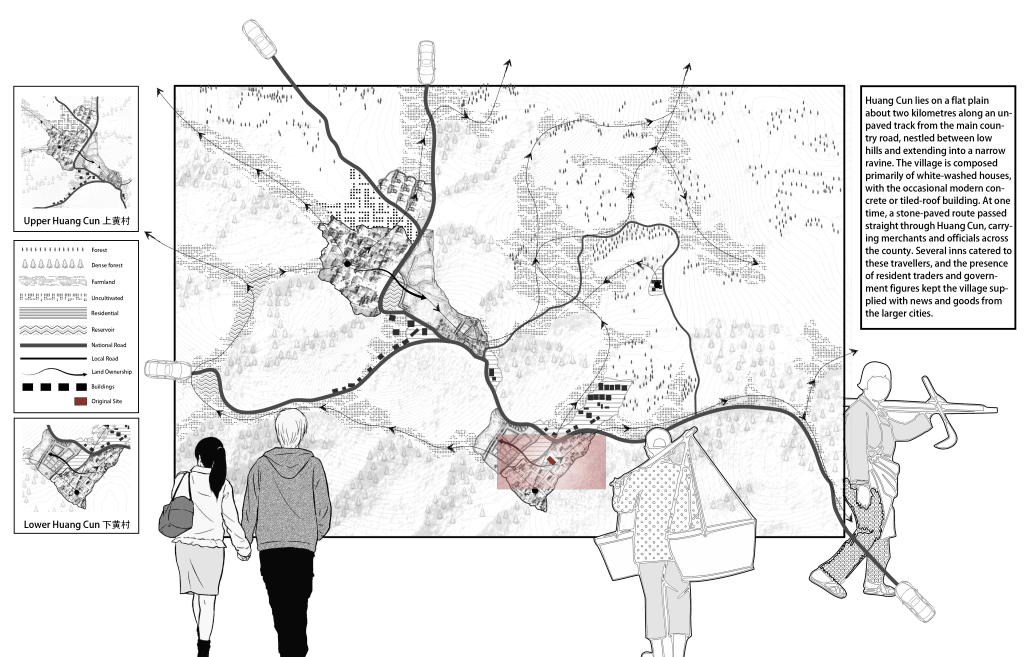
What I noticed when visiting was how the characteristics of this heritage rooted in commerce and agriculture was still very much present, as if the village was trapped in the early 20th century. The village has some modern buildings, yes, but farm animals are also commonplace and agriculture still bears great importance. Kids are running and cars are limited, except for motorcycles going to deliver the scarce packages or materials for construction workers. Even on a sunday, the village was filled with calm beauty and vitality shining from its core.
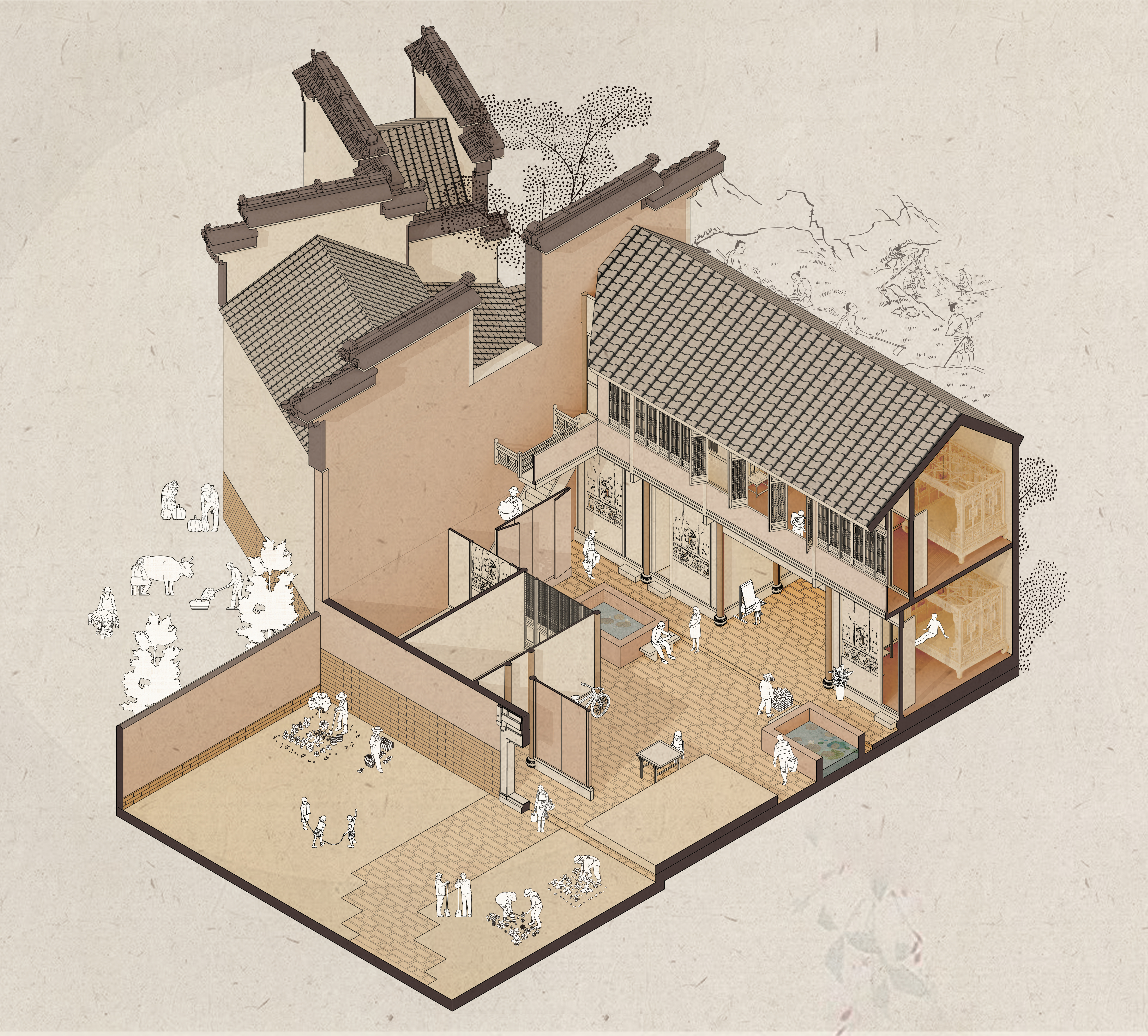

 The Afterlife of Yin u Tang